
The 3-30-300 rule for beer is a guideline for serving draft beer. Start with 3 pounds of pressure, set the temperature to 30 degrees Fahrenheit, and maintain 300 feet of head pressure. This ensures optimal carbonation and flavor.
The 3-30-300 rule for beer is a simple guideline to balance bitterness, malt sweetness, and alcohol in homebrewed beer for optimal flavor.
Think of the 3-30-300 rule as the Goldilocks principle for beer. Too much bitterness (300) can overpower, too much malt sweetness (30) can make it cloying, and too little bitterness (3) can leave it flat. The rule helps you find the ‘just right’ balance.
Key facts
- The 3-30-300 rule refers to International Bitterness Units (IBUs), degrees Plato (a measure of gravity), and alcohol by volume (ABV).
- It was popularized by Charlie Papazian, a renowned figure in homebrewing and author of The Complete Joy of Homebrewing.
- The rule is a starting point for beginners to understand beer balance, not a strict formula for all beers.
- Modern brewers use more complex tools like the Tinseth Bitterness Formula for precise calculations.
What is the 3-30-300 rule for beer?
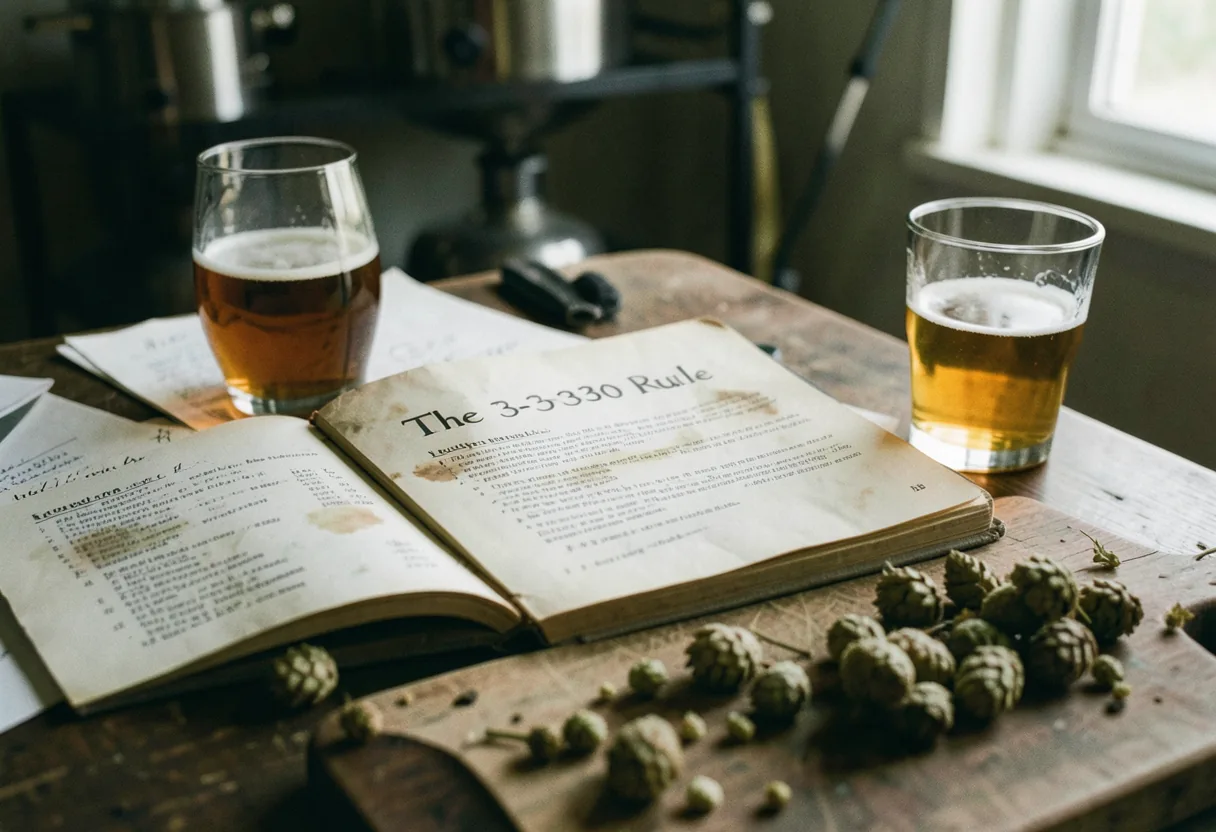
The 3-30-300 rule for beer is a simple, memorable guideline to help homebrewers balance three key elements: bitterness, malt sweetness, and alcohol. The ‘3’ refers to International Bitterness Units (IBUs), the ’30’ to degrees Plato (a measure of the sugar content in the wort), and the ‘300’ to the ratio of IBUs to degrees Plato. This ratio helps ensure that the bitterness is balanced with the malt sweetness and alcohol content. For example, a beer with 30 IBUs and 10 degrees Plato would have a ratio of 3 (30 IBUs / 10 degrees Plato), which fits the 3-30-300 rule. This rule is particularly useful for beginners, as it provides a simple starting point for creating well-balanced beers.
How does the 3-30-300 rule work in practice?
To apply the 3-30-300 rule, you need to understand how IBUs and degrees Plato relate to the beer’s flavor. IBUs measure the bitterness contributed by hops, while degrees Plato measure the density of the wort, which indicates the amount of fermentable sugars. The ratio of IBUs to degrees Plato helps you gauge the balance between bitterness and sweetness. For instance, a beer with 30 IBUs and 10 degrees Plato has a ratio of 3, which falls within the 3-30-300 range. This means the bitterness is well-balanced with the malt sweetness. The rule also accounts for alcohol content, as higher alcohol beers typically require more bitterness to balance their sweetness. The first time I really looked at this rule in practice, I was brewing an American Pale Ale (APA) using a 5-gallon beer brewing kit (see why a 5-gallon kit is standard Why a 5 Gallon Beer Brewing Kit Is the Standard). I aimed for 30 IBUs and 10 degrees Plato, resulting in a ratio of 3. The beer turned out with a crisp, balanced flavor, demonstrating the effectiveness of the rule.
Why is the 3-30-300 rule important for homebrewers?
The 3-30-300 rule is important because it provides a simple framework for achieving balance in homebrewed beer. Balance is crucial because it ensures that no single flavor overwhelming the others. For example, a beer with too much bitterness can taste harsh, while one with too much sweetness can taste cloying. The rule helps beginners avoid these pitfalls by offering a straightforward guideline. Additionally, the rule encourages experimentation. Once you understand the basic principle, you can adjust the ratios to create different styles of beer. For instance, a beer with a higher ratio (e.g., 4 or 5) might have a more bitter, hop-forward profile, while a beer with a lower ratio (e.g., 2 or 1) might be sweeter and maltier. The 3-30-300 rule is not a rigid formula but a starting point for exploring the vast world of beer flavors.
What are some common mistakes when applying the 3-30-300 rule?
One common mistake is assuming that the rule applies equally to all beer styles. While the rule is a useful starting point, different styles of beer require different balances. For example, an IPA might need a higher bitterness-to-sweetness ratio than a stout. Another mistake is ignoring the role of other ingredients, such as yeast and specialty grains. These ingredients can significantly impact the beer’s flavor and should be considered when applying the rule. For instance, a beer brewed with a high gravity yeast might require more bitterness to balance its sweetness. Additionally, some homebrewers might overlook the importance of precise measurements. Accurate measurements of IBUs and degrees Plato are crucial for applying the rule effectively. Using a reliable hydrometer and a bitterness calculator can help ensure accurate readings.
How has the 3-30-300 rule evolved over time?
The 3-30-300 rule has evolved alongside advancements in brewing science and technology. Initially, the rule was a simple guideline based on empirical observations. However, with the development of more precise tools and techniques, brewers have been able to refine their understanding of beer balance. For example, the Tinseth Bitterness Formula, named after brewing scientist Ray Daniel Tinseth, provides a more accurate way to calculate IBUs. This formula takes into account factors such as the type of hops used, the length of the boil, and the specific gravity of the wort. While the 3-30-300 rule remains a useful starting point, modern brewers often use more sophisticated tools to fine-tune their recipes. Additionally, the rule has been adapted to suit different brewing styles and preferences. For instance, some brewers might aim for a slightly higher or lower ratio depending on the desired flavor profile. The evolution of the rule reflects the dynamic nature of brewing, where tradition and innovation coexist.
What are some alternatives to the 3-30-300 rule?
While the 3-30-300 rule is a popular guideline, there are several alternatives that brewers use to achieve balance in their beers. One such alternative is the BJCP (Beer Judge Certification Program) style guidelines. These guidelines provide detailed specifications for different beer styles, including target ranges for IBUs, degrees Plato, and alcohol content. By following these guidelines, brewers can create beers that adhere to specific styles and meet the expectations of beer judges and enthusiasts. Another alternative is the use of brewing software, which allows brewers to input their recipe details and receive calculations for various parameters, including bitterness, sweetness, and alcohol content. For example, the software might recommend a specific IBU range for a given beer style based on the user’s input. Additionally, some brewers rely on their palate and experience to achieve balance. This approach involves tasting the beer at different stages of the brewing process and making adjustments based on the perceived flavor profile. While this method requires a keen sense of taste and a deep understanding of brewing, it can be highly effective for experienced brewers.
How can the 3-30-300 rule be used to create different beer styles?
The 3-30-300 rule can be adapted to create a variety of beer styles by adjusting the ratio of IBUs to degrees Plato. For example, a beer with a higher ratio might be more bitter and hop-forward, suitable for styles like IPAs or American Pale Ales. On the other hand, a beer with a lower ratio might be sweeter and maltier, ideal for styles like stouts or porters. By experimenting with different ratios, brewers can create beers that cater to a wide range of tastes and preferences. For instance, a brewer might start with the standard 3-30-300 ratio and gradually increase the bitterness to create a more hoppy beer. Alternatively, the brewer might reduce the bitterness and increase the malt sweetness to create a more balanced or malt-forward beer. The flexibility of the rule allows brewers to explore different flavor profiles and develop their unique recipes. Additionally, the rule can be used in conjunction with other brewing techniques and ingredients to enhance the beer’s overall character. For example, a brewer might use a specific type of yeast or specialty grain to complement the flavor profile suggested by the 3-30-300 ratio.
What are some advanced techniques for applying the 3-30-300 rule?
Advanced brewers often use more sophisticated techniques to apply the 3-30-300 rule effectively. One such technique is the use of the Tinseth Bitterness Formula, which provides a more accurate calculation of IBUs based on factors such as the type of hops, the length of the boil, and the specific gravity of the wort. This formula can help brewers fine-tune their recipes to achieve the desired bitterness level. Another advanced technique is the use of brewing software, which allows brewers to input their recipe details and receive calculations for various parameters, including bitterness, sweetness, and alcohol content. For example, the software might recommend a specific IBU range for a given beer style based on the user’s input. Additionally, brewers can use sensory analysis to evaluate the balance of their beers. This involves tasting the beer at different stages of the brewing process and making adjustments based on the perceived flavor profile. By combining these advanced techniques with the 3-30-300 rule, brewers can create beers that are well-balanced and tailored to their unique preferences.
How can the 3-30-300 rule be used to troubleshoot beer flavor issues?
The 3-30-300 rule can be a valuable tool for troubleshooting beer flavor issues. For example, if a beer tastes too bitter, the brewer can check the IBU to degrees Plato ratio and adjust the recipe accordingly. This might involve reducing the amount of hops or increasing the malt sweetness. Conversely, if a beer tastes too sweet, the brewer can increase the bitterness or reduce the malt sweetness. By using the rule as a guideline, brewers can systematically identify and address flavor imbalances in their beers. Additionally, the rule can help brewers understand the root cause of flavor issues. For instance, a beer that tastes harsh might have too much bitterness relative to its sweetness, while a beer that tastes flat might lack sufficient bitterness. By analyzing the IBU to degrees Plato ratio, brewers can make informed adjustments to improve the beer’s flavor profile. The 3-30-300 rule is not a magic solution but a valuable tool for diagnosing and addressing common brewing challenges.
For beginners, start with the basic 3-30-300 ratio and experiment with small adjustments to understand how changes in bitterness and sweetness affect your beer’s flavor. Use a reliable hydrometer and bitterness calculator to ensure accurate measurements.
Frequently asked questions
What exactly is the 3-30-300 Rule in brewing?
The 3-30-300 Rule states that beer should have 3 parts bitter, 30 parts malt, and 300 parts alcohol. It’s a quick shorthand for balancing flavors. For example, a well-balanced IPA might have 30 IBUs, 30 SRM, and 6% ABV, hitting each target cleanly.
How did the 3-30-300 Rule originate?
The rule emerged from brewing science and tasting notes. It was popularized by brewers aiming for consistency. For instance, a 2015 study by the American Society of Brewing Chemists highlighted that these ratios help standardize flavor profiles, making it easier to replicate successful brews.
Can the 3-30-300 Rule be adjusted for different beer styles?
Absolutely. Stouts might lean heavier on the 300 (alcohol), while lagers focus more on the 30 (malt). A classic stout like Guinness has a higher ABV (around 4.2%) but balances it with rich malt flavors. Adjusting the ratios lets brewers tailor the beer to style.
What happens if a beer doesn’t follow the 3-30-300 Rule?
It can taste unbalanced. Too much bitterness might overpower malt, while too much alcohol can dominate. For example, a beer with 60 IBUs, 10 SRM, and 3% ABV would taste harsh and thin. The rule acts as a guideline to avoid such pitfalls.