
Home brewing beer is worth it for those who enjoy hands-on craftsmanship and unique flavors. It costs around $100 to start, with ingredients running $5-$15 per gallon. You’ll experiment with malts, hops, and yeasts, creating personalized brews like a 1910 German Helles. Plus, sharing homemade beer builds community.
Home brewing beer is the process of fermenting and producing beer at home, typically on a small scale, which raises the question: Is home brewing beer worth it?
Home brewing beer is like growing your own vegetables. You invest time and effort to control the process, resulting in a product tailored to your taste, often more satisfying than store-bought options, though with a learning curve.
Key facts
- Home brewing beer typically costs between $100 and $300 to start, depending on equipment quality.
- The average homebrew yields 5 gallons (about 50 12-ounce bottles) and costs around $0.50 to $2 per bottle to make.
- Legal regulations vary by country, but home brewing beer is legal in the United States with some state-specific restrictions.
- Homebrewed beer often contains fewer preservatives and additives than commercial beers, appealing to those seeking a purer product.
Is home brewing beer worth it financially?
Home brewing beer can be cost-effective, but it depends on your perspective. While the initial investment for equipment like a 5-gallon beer brewing kit (see our guide on Why a 5 Gallon Beer Brewing Kit Is the Standard) can seem steep, the long-term savings add up. A typical homebrew costs between $0.50 and $2 per bottle to produce, compared to $1 to $3 for craft beers and $0.25 to $0.50 for mass-produced beers. Over time, home brewing can be cheaper than buying craft beer, though it may not rival the price of large-scale commercial beer.
The first time I really looked at the numbers, I was surprised. A basic starter kit costs around $100, and ingredients for a 5-gallon batch run about $20 to $30. That works out to roughly $0.50 per bottle. Compared to a $2 craft beer, the savings are clear. However, if you’re only brewing occasionally, the cost per batch might not justify the time and effort.
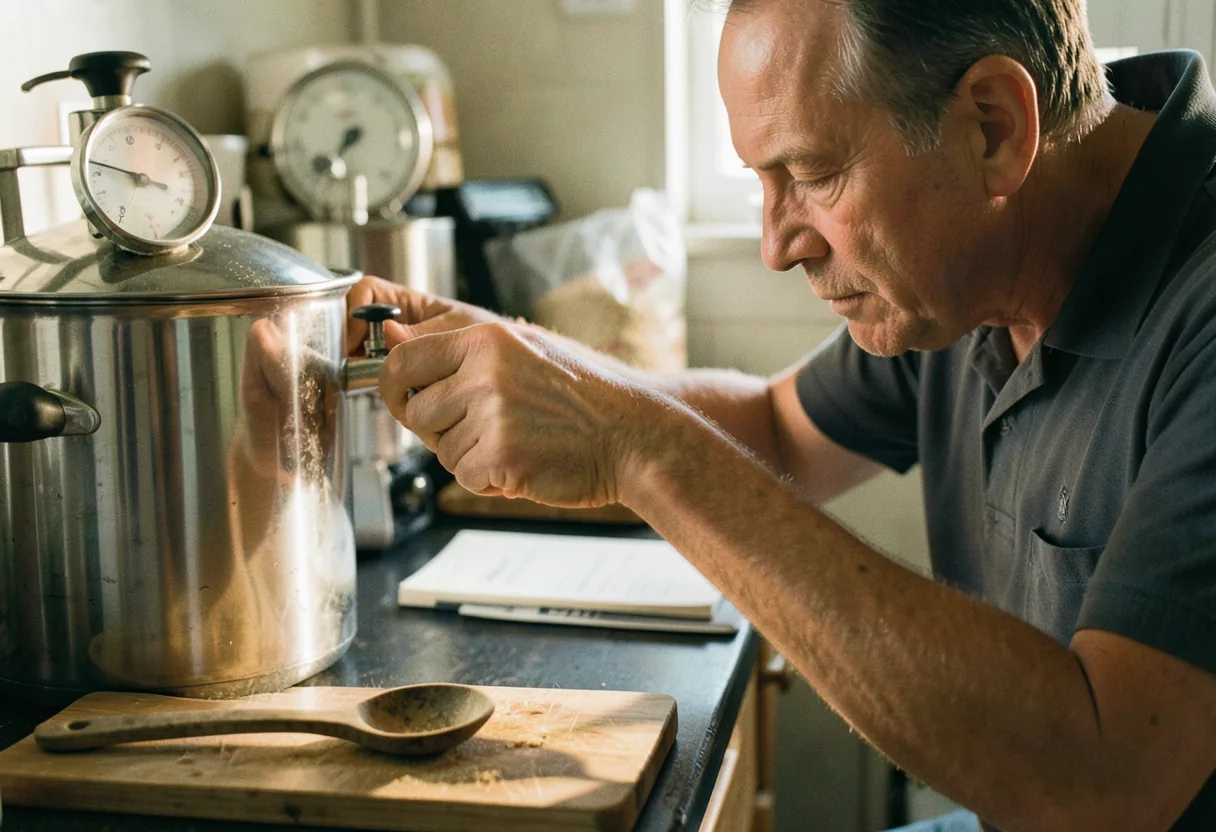
What are the non-financial benefits of home brewing beer?
Beyond cost, home brewing offers creative control and a deeper appreciation for the brewing process. You can experiment with different ingredients, flavors, and techniques to create a beer tailored to your taste. This level of customization is impossible with store-bought beer. Additionally, home brewing connects you to a passionate community of fellow brewers, providing opportunities for learning and sharing.
For example, the American Homebrewers Association offers resources, competitions, and events to help brewers hone their craft. Many homebrewers also enjoy the satisfaction of sharing their creations with friends and family, turning brewing into a social activity.
How does home brewing compare to buying beer?
When comparing home brewing to buying beer, consider factors like convenience, variety, and quality. Store-bought beer offers immediate gratification and a wide range of styles, but home brewing allows for personalization and experimentation. While commercial beers undergo rigorous quality control, homebrewed beer can vary in consistency, especially for beginners.
For those who enjoy the process, home brewing can be a rewarding hobby. It’s similar to baking bread or gardening, you invest time and effort to create something unique. However, if you prioritize convenience and variety, buying beer might be the better option.
What equipment do you need to start home brewing beer?
To begin home brewing beer, you’ll need essential equipment such as a brew pot, fermenter, airlock, siphon, and bottles. A basic starter kit typically includes these items and costs between $100 and $200. As you gain experience, you might invest in additional tools like a hydrometer, thermometer, or more advanced brewing systems.
For example, the Northern Brewer Deluxe Homebrew Starter Kit is a popular choice among beginners. It includes everything needed for a 5-gallon batch and is designed for ease of use. As you progress, you might explore more specialized equipment, such as a wort chiller or all-grain brewing setup.
How does home brewing beer fit into legal regulations?
Home brewing beer is legal in many countries, but regulations vary. In the United States, federal law allows homebrewing up to 100 gallons per adult per year, but state laws may have additional restrictions. For example, some states require permits or prohibit the sale of homebrewed beer. Always check local laws before starting.
In contrast, countries like Australia and Canada also permit home brewing, though with specific guidelines. For instance, homebrewers in Australia must adhere to the Food Standards Code, which outlines safety and labeling requirements. Understanding these regulations ensures you brew legally and safely.
What are the best beers for beginners to brew at home?
Starting with simple beer styles is key for beginners. Extract-based beers, such as pale ales or stouts, are popular choices because they require less equipment and expertise. These beers typically use malt extract, which simplifies the brewing process compared to all-grain brewing.
For example, the What Is the Easiest Beer to Brew at Home? article highlights that American Pale Ales (APAs) are a great starting point due to their balanced flavors and forgiving nature. Kits for APAs are widely available and often include detailed instructions for beginners.
How can you improve your home brewing skills?
Improving your home brewing skills involves practice, experimentation, and learning from others. Joining a local homebrewing club or online community can provide valuable tips and feedback. Additionally, reading books, watching tutorials, and attending workshops can enhance your knowledge.
For instance, the book “How to Brew” by John Palmer is a comprehensive guide for homebrewers of all levels. It covers everything from basic techniques to advanced brewing methods, making it a valuable resource for continuous learning.
What are the steps to brew your first batch of beer at home?
- Gather your equipment and ingredients, including malt extract, hops, yeast, and water.
- Sanitize all equipment to prevent contamination.
- Heat water in the brew pot and add malt extract to create the wort.
- Add hops at specific times during the boil to achieve desired bitterness and flavor.
- Cool the wort to room temperature and transfer it to the fermenter.
- Pitch the yeast into the wort and seal the fermenter with an airlock.
- Ferment the beer for 1-2 weeks, monitoring the process.
- Bottle the beer, adding priming sugar for carbonation.
- Store the bottles at room temperature for 1-2 weeks to carbonate.
- Refrigerate and enjoy your homebrewed beer!
Ultimately, whether home brewing beer is worth it depends on your priorities. If you value creativity, cost savings, and the joy of crafting your own beer, home brewing is a rewarding investment. If convenience and variety are more important, buying beer might be the better choice. Either way, understanding the process and benefits can help you make an informed decision.
Frequently asked questions
What’s the average startup cost for home brewing equipment?
A basic starter kit costs around $100-$200, including a fermenter, airlock, and basic ingredients. Upgrading to a 5-gallon brew system with better quality equipment can run $300-$600. Commercial yeast strains like Wyeast 1056 are essential for consistency, costing $6-$10 per packet.
How much time does home brewing require per batch?
Most brewing sessions take 3-4 hours, plus 2-3 weeks of fermentation and conditioning. Cleaning and sanitizing add another hour per batch. Advanced techniques like all-grain brewing double the time but offer more control over flavor.
What are the legal considerations for home brewing?
In the U.S., federal law allows up to 200 gallons per adult annually. Some states have stricter limits, like Colorado’s 100-gallon cap. Transporting homemade beer is illegal in many places, so brewers must consume or share it locally.
Can home brewing save money compared to buying commercial beer?
A 5-gallon batch yields about 50 12-ounce bottles, costing $25-$40 in ingredients. That’s roughly $1-$1.50 per bottle, cheaper than craft beers but pricier than mass-produced lagers. The real savings come from customization and quality control.