
Brewing beer at home starts with malted barley. The process involves steeping grains in hot water to extract sugars, then boiling with hops for flavor. Fermentation with yeast converts sugars into alcohol. A 5-gallon batch uses about 6-7 pounds of malt extract. Homebrewers often use kits with malt, hops, and yeast for simplicity.
Brewing beer from home is the process of fermenting grains, hops, and yeast to create alcoholic beverages in your own kitchen or dedicated brewing space.
Think of it like baking bread, but instead of yeast making your dough rise, it’s converting sugars into alcohol. You’ll mix malted barley with hot water to create a sweet liquid called wort, boil it with hops for flavor, then let yeast turn it into beer.
Key facts
- Homebrewing beer requires malt, hops, yeast, and water as the four essential ingredients.
- The legal limit for homebrewed beer in the U.S. is 200 gallons per adult per year, per household.
- Fermentation typically takes 1-2 weeks, with an additional 2-4 weeks for conditioning.
- Sanitation is critical, contaminated brews can ruin an entire batch.
What you need
- A large brewing kettle (5+ gallons)
- A fermenter (glass carboy or plastic bucket)
- An airlock (to let CO2 escape without letting oxygen in)
- A hydrometer (to measure alcohol content)
- Sanitizing solution (e.g., Star San)
- Basic ingredients (malt extract, hops, yeast)
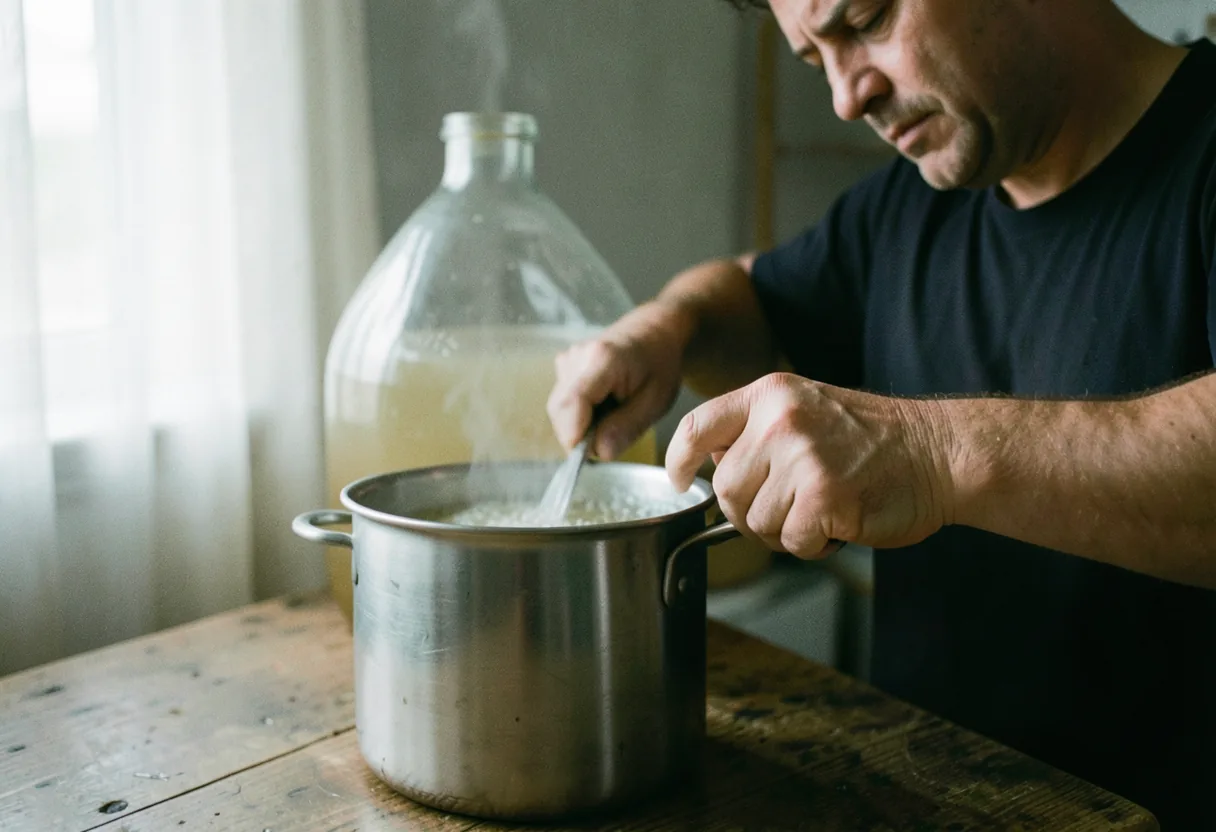
How to brew beer at home for beginners
- Choose a simple recipe like an American Pale Ale to start, it’s forgiving and widely available in beginner kits.
- Sanitize all your equipment thoroughly, including the fermenter, airlock, and any tools you’ll use.
- Heat water in your brewing kettle and add malt extract, stirring until dissolved to create the wort.
- Bring the wort to a boil, then add hops according to your recipe (e.g., bittering hops first, then aroma hops later).
- Cool the wort quickly (use an ice bath or immersion chiller) to 70°F (21°C) before transferring it to your sanitized fermenter.
- Aerate the wort by gently stirring or pouring it from a height to help the yeast get to work.
- Pitch your yeast into the fermenter, seal it with the airlock, and let it ferment in a dark, temperature-controlled space (68-72°F or 20-22°C) for 1-2 weeks.
- After fermentation, transfer the beer to a secondary vessel (or bottle it directly) for conditioning. Add priming sugar if bottling.
- Bottle or keg your beer, then wait 2-4 weeks for carbonation before enjoying your first homebrew.
Common mistakes to avoid
Overlooking sanitation is the #1 mistake, even tiny contaminants can spoil your beer. The first time I really looked at this, I was shocked at how much detail goes into cleaning every nook of your gear. Also, don’t rush fermentation; beer needs time to develop its flavors.
Another mistake is using tap water with high chlorine content, which can affect yeast health. Always use filtered or spring water if your tap water isn’t brew-friendly.
What is the 3 30 300 rule for beer?
The 3 30 300 rule is a simple guideline for balancing beer ingredients: 3 pounds of malt per gallon, 30 International Bittering Units (IBU) for hop bitterness, and 30 Standard Reference Method (SRM) for color. This rule helps beginners create balanced, drinkable beer without overcomplicating the process.
Brewing beer from home recipes
Start with a basic extract beer recipe, like a simple blonde ale or root beer if you’re avoiding alcohol. These recipes use malt extract, making them easier than all-grain brewing. As you gain confidence, explore more complex styles like stouts or IPAs.
Brewing beer from home for beginners
If you’re new to brewing, invest in a beginner-friendly kit like the Mr. Beer Homebrew Kit or the Northern Brewer Deluxe Brewing Kit. These include everything you need to brew your first batch, plus easy-to-follow instructions.
How to brew beer at home without a kit
You can brew beer without a kit by sourcing ingredients individually: malt extract from a homebrew shop, hops from online retailers like MoreBeer, and yeast from a supplier like [Wyeast Laboratories](https://en.wikipedia.org/wiki/Wyeast_Laboratories). A large pot, fermenter (like a food-grade bucket), and airlock are the only other essentials.
Is home brewing beer worth it?
Yes, homebrewing is cost-effective after the initial equipment investment, and it offers endless creativity. Plus, you’ll learn to appreciate beer at a deeper level. According to the American Homebrewers Association, the average cost per gallon of homebrewed beer is $1-$2, compared to $5-$10 for craft beer.
What is the easiest beer to make at home?
The easiest beer to make at home is a blonde ale or extract-based ale. These styles use simple ingredients and require minimal equipment. A root beer or cider is even easier if you’re avoiding alcohol entirely.
Best brewing beer from home kits
For beginners, the is a top choice, offering everything you need for your first brew. If you’re looking for a smaller setup, the Mr. Beer Homebrew Kit is a great entry point.
Brewing beer from home reddit
Join online communities like r/homebrewing on Reddit for tips, troubleshooting, and recipe ideas. These forums are full of experienced brewers who can answer questions and share their successes (and failures).
Brewing beer from home for sale
If you’re looking to sell homebrewed beer, check local laws, some states allow limited sales, while others prohibit it entirely. The American Homebrewers Association provides resources on legalities and licensing.
Top Posts: Learn How to Make Beer at Home
Explore guides and videos from trusted sources like the American Homebrewers Association or YouTube channels like How to Brew. These resources offer step-by-step tutorials for every stage of brewing.
Join for Less than a Pint
Consider joining a homebrewing club or online membership like the American Homebrewers Association. Membership often includes access to exclusive content, discounts on brewing supplies, and a community of passionate brewers.
Start Your Monthly Membership
Many brewing supply stores offer subscription services with monthly ingredient kits, recipe ideas, and expert advice. These can be a great way to stay inspired and try new styles regularly.
Advanced techniques for brewing beer at home
Once you’ve mastered the basics, explore advanced techniques like all-grain brewing, which involves mashing your own grains for a more customized flavor profile. This method requires additional equipment, such as a mash tun and a brew kettle, but it offers greater control over your beer’s characteristics. Other advanced techniques include dry hopping for added aroma, using specialty malts for unique flavors, and experimenting with different yeast strains.
Troubleshooting common brewing problems
Even experienced brewers encounter issues. Here are some common problems and their solutions:
- Stuck fermentation: Ensure your yeast is viable and the temperature is within the optimal range. Aerate the wort properly before pitching the yeast.
- Off-flavors: Poor sanitation can lead to bacterial infections, resulting in flavors like vinegar or band-aid. Always sanitize your equipment thoroughly.
- Over-carbonation: Use the correct amount of priming sugar when bottling. Too much sugar can lead to explosive bottles.
- Cloudy beer: This can be caused by inadequate conditioning time or high protein levels in the wort. Try cold-crashing your beer before bottling to clarify it.
Takeaway: Brewing beer from home is a rewarding hobby that combines science and art. Start simple, focus on cleanliness, and don’t be afraid to experiment. Your first batch might not be perfect, but every brew will teach you something new.
Frequently asked questions
What is the easiest beer to brew at home?
Start with an extract kit for an American Pale Ale. It uses malt extract, which simplifies the process. Follow a basic recipe with a single hop variety like Cascade for a balanced, beginner-friendly brew. Expect a modest ABV around 5% and a clean finish.
What is the 3 30 300 rule for beer?
This rule suggests spending $3 on ingredients, 30 minutes brewing, and 300 days aging for a quality beer. It highlights that great beer often requires time and patience. Adjust ratios for different styles, but the core idea remains: good beer takes effort and waiting.
Is home brewing beer worth it?
Yes, if you enjoy the process and experimentation. Homebrewing lets you customize flavors and learn about beer styles. It’s rewarding to share your creations with friends. However, it demands time and space, so weigh the effort against your interest.
Is homebrewing cheaper than buying beer?
Not always. Ingredients for a 5-gallon batch cost around $30-$50, yielding about 50 12-oz bottles. That’s $1-$2 per bottle, comparable to mid-tier store-bought beer. Cheaper ingredients may cut costs, but quality often suffers. Factor in equipment costs for a full comparison.